Celebrating ShilpSparsh
Years may pass, but some classrooms never really leave us. A journey back to ShilpSparsh and the children of T. Begur, where knowledge crossed boundaries, friendships took root, and learning became something beautifully mutual.
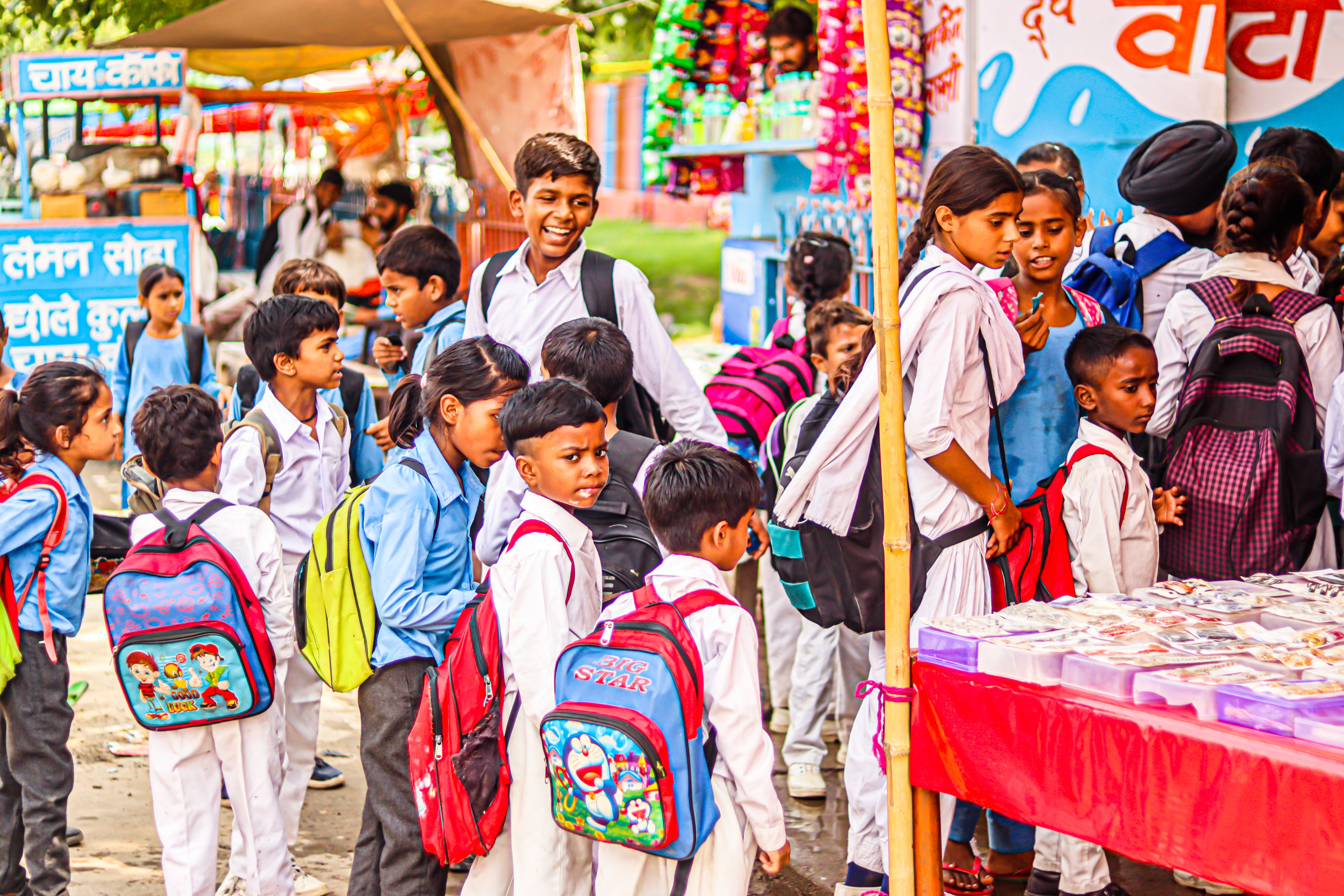
In all my school years, there were really only two days I consistently looked forward to. One, of course, was everyone’s favorite, the annual school trip – it’s difficult to remain unexcited by the prospect of a day within the circle of classmates and teachers but beyond the confines of classrooms and lectures. The second was a day, albeit less universally experienced, but one that never failed to have a profound impact on me – the ShilpSparsh experience. And while I remain conscious of the fact that this is the most appropriate juncture to get you all acquainted with ShilpSparsh, I also am starting to think that defining it to a non-Shilpite (Shilpite: alumnus from Vidyashilp Academy, like myself) is quite a tricky task – particularly when I could find no helpful words on the school’s website even after scouring through it for a quarter hour.
ShilpSparsh is a [subject? department? concept? program?] that spent most of the academic year lurking in the shadows while students feared its (discontinuation? dissolution?). Then, one day, it would suddenly spring up on us, usually before the Dusshera holidays, turning fading hope into beaming excitement. What it entailed is something that may be explained with less dubiety.
The announcement of ShilpSparsh in the classroom was usually followed by a quick round of excited and expectant glances, gradually amplifying whispers, subtle non-verbal exchanges, and wildly exaggerated beckons for attention from a fellow recruit, all of which culminated in the establishment of groups that would work together on the (project?).
In the weeks leading up to the day, these groups would not stop spending the majority of their breaks, free periods, and the bleak transitional intervals between classes planning and discussing in anticipation of that day. The discussions usually began with choosing an academic concept, with decisions often being heavily biased towards the popular subject amongst members of the group and the most memorable classes from the previous academic years, and against anything even minutely correlated to topics already conquered by other groups. A list of pros and cons for each such concept would be drawn up and debated, with rebuttals, before the superior contender would be crowned.
What followed later was the ideation and production session. Here we’d come up with (what we believed were) the most effective ways to teach the chosen concept and then assembled all materials we conceived necessary for the smooth transfer of our funds of knowledge on the topic and its assessment.
During my time at school, I vividly remember that models, puppet shows, and worksheets were among the most popular pedagogical aids. Besides these resources, every group would solemnly follow the undocumented but universally acknowledged tradition of printing out feedback forms. These forms bore all those questions that we expected to feel nagging at the back of our heads once we had taught (imparted wisdom to) our audience.
The fateful day that we’d been awaiting would pierce through the mist and break into daylight, accompanied once again by a quick round of excited and expectant glances, gradually amplifying whispers, subtle non-verbal exchanges, and wildly exaggerated beckons for attention, culminating this time in the recruitment of a bus seatmate. A race to the bus pulled up in the parking lot and a momentary skirmish to seize the best seats would follow in close succession; these often ended in a peace treaty that promised the contested seats to the opposing party on the trip back. That marked the beginning of our day-long trip to the distant village of T. Begur. The village was a small, dusty piece of earth, which lay in exile on the outskirts of Bangalore.
The hour-long journey, I recollect distinctly, ended abruptly with the bus pulling over to the side of the main road. Thirty-odd students would clamber down the bus and wait with contained excitement on the dusty roadside as the empty bus accelerated away (though I cannot recall where to). A long line behind our class teacher, like ducklings waddling after Mama Duck, would find its way into a small courtyard building that proudly hosted a playground and platform for a stage at its center; a large (mango?) tree stood at the head of one of its wings, while the iconic painting of two children seated on a flying pencil adorned its wall. We had arrived at the government high school at T. Begur.
We, the annual visitors, would wait impatiently at the gates of this fondly remembered retreat while the teachers from both schools engaged in hasty, seemingly important deliberations before disappearing through the black rectangular entrances of the distant classrooms. After a brief moment of silence and stillness soaked in anticipation, they would emerge – lines of girls and boys, only a few years younger than ourselves, pouring out from each classroom. They were neatly segregated into groups, keen and curious, each moving towards a predefined destination in some shaded corner of the building. As they neared their designated spot, the gates opened for us, and each of our groups moved to one of the occupied spots as directed by the teachers to finally meet our students for the day.
Thus began our classes. [A quick round of introductions ensued to help us put a name to each of those diverse personalities in our audience. Some jittered with excitement and anticipation, while others remained meek and timid in the face of an encounter with uninvited strangers. In a fifteen-to-twenty-minute session that followed for each group, we would convey unto our students the concept we had chosen. In a crude mix of Kannada and English, we did our best to transfer the knowledge of topics we held close to our hearts unto them. Poems would be recited, diagrams would be sketched, models would be presented, and paragraphs would be read.]Working through exercise problems in our crafted worksheets and exchanging praise and encouragement as the situation deemed necessary, we’d sit together under the shade of a building or a tree, but in the light of newfound learning. As we navigated hand in hand through grammar and sums, all sense of unfamiliarity and discomfort dissolved, and this precious bond of [friendship? love? fraternity?] emerged. Towards the end of the session with a group, we would pull out our feedback forms and hand them out to our transient students, refraining from peeking into the filled ones. This set the premise for long reading and spirited discussions on our ride back.
Once every possible combination of two groups of students in distinct uniforms had been explored, we broke, in a real school-life sense, into recess. All erstwhile groups dissolved into a splotchy mess on the dirt-clad playground. More frequently, students from the school at T. Begur would set us up for a mini-orientation on traditional games and sports that were less popular in the city side back then, like gilli-danda, lagori, raja-rani, and so many more. We’d run about and play as per their directions, often picking up a phrase or two of the colloquial slang in the process. The less active ones among us would seek shade under the tree and learn about rural lifestyles by listening to snippets of our friends’ lives. These conversations were often eye-openers; they would jolt us awake to the reality of rural problems and how indifferent we were to them. These were stories of struggles and sacrifice that left us moved and inspired. This recess period would inevitably end with students of T. Begur government high school putting up an impromptu show for us, featuring dance segments to popular Kannada songs, mind-boggling acrobatics, and soothing musical fervor.
It was at this high that the sorrow of impending separation hit us all. As the day drew to a close, we compiled all our devised teaching aids and submitted them at the staff room, hoping dearly for an extended period of their use. With final words of acknowledgement and gratitude and a promise to return the next year, we would scramble back onto the bus and depart, bringing ShilpSparsh to a close.
It has been more than six years since I last went for a ShilpSparsh (event? trip? program?, whatever you may like to call it), but my learnings from it remain deeply etched in my impressions. It was exchanges like those with my students at T. Begur that stood, in my understanding then and my memory now, as sturdy testaments to the fact that the true value of education lies in its mutual impartation. It’s astonishingly beautiful how bidirectional knowledge transfer serves as such a solid foundation for building unforgettable bonds. What stands out even more distinctly is the transcendence of imparted knowledge - evident in the preservation and use of those pedagogical materials we fabricated in previous years and that we were lucky enough to spot on subsequent visits.
So profound were my takeaways from these annual experiences, and so ingrained are they in my cherished memories, that even today they form the basis of the unwavering enthusiasm I feel overcome by on Open Day, during class discussions, and even in casual study sessions here at IISc. An exquisite sense of gratification blooms with every attempt to share what I know and learn what I can, one that I have come to yearn for with each passing semester. I have come to appreciate that sharing knowledge is what truly makes the learning process worthwhile. So now I celebrate a ShilpSparsh every day!
Comments