Thinking Conventionally
The first draft, the messy, crossed-out, arrows-everywhere first draft? That one's mine.
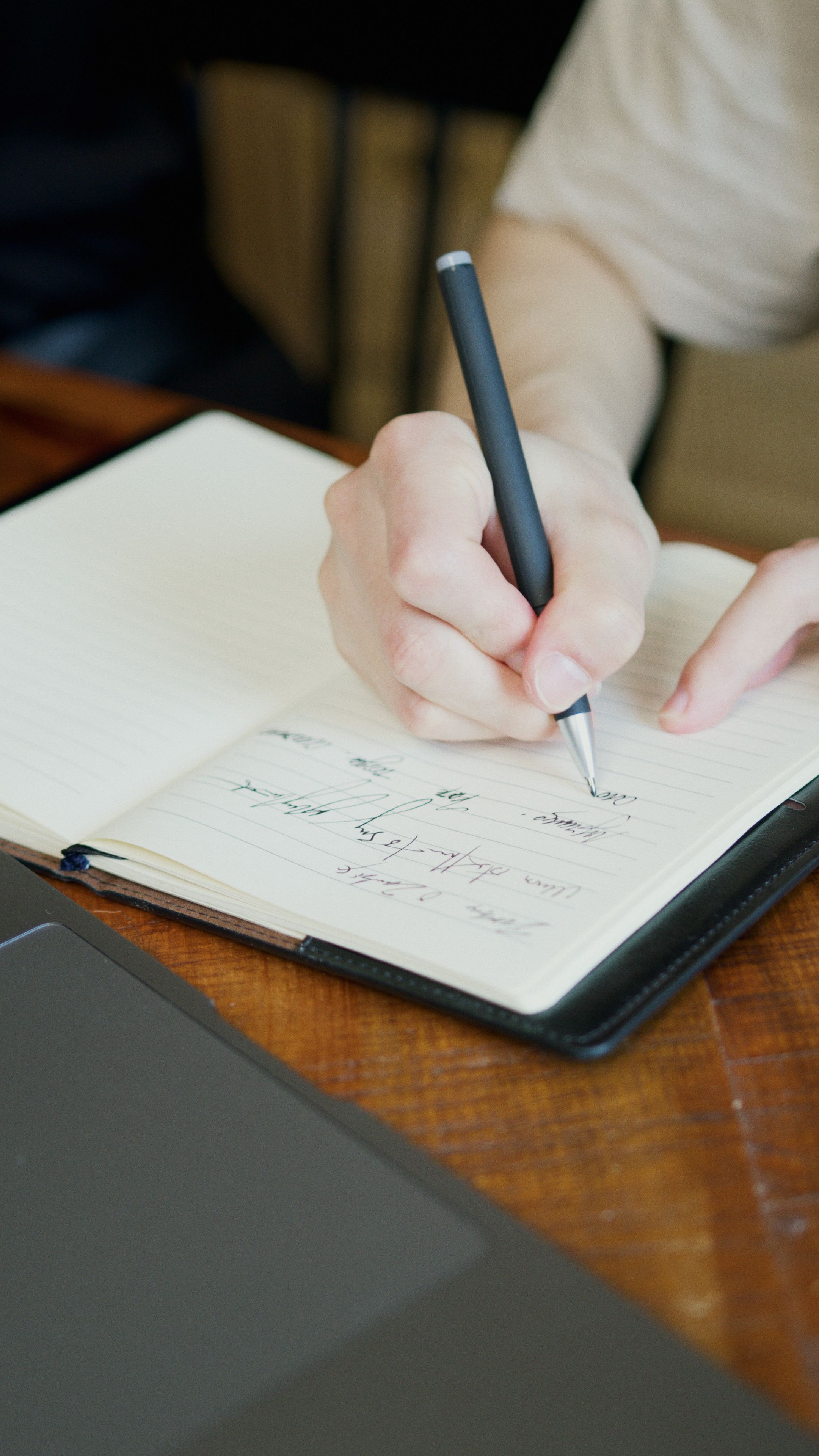
Why I still think with a pen, in an age where thinking comes pre-cooked. Dear Autocomplete,
It’s not you, it’s me. Okay, it’s a little bit you. I mean, it is because of you.
You’re fast. You’re polite. You’ve never once told me my question was stupid. Ask you to explain entropy at 2 a.m., and you’ll hand me five neat bullet points and a cheerful offer to “go deeper.” And I’ll nod, close the tab, and ten minutes later I won’t remember a single one of them.
Turns out that’s not just me. In 2025, some people at MIT’s Media Lab put EEG caps on students writing essays. The ones using only their brains lit up the most. The ChatGPT crowd lit up the least, and most of them couldn’t quote a single line from an essay they had “written” minutes earlier. The researchers called it cognitive debt. For me, it’s yet another Tuesday.
So I went back to thinking on paper. Here’s what it does that you don’t.
It’s slow. That’s the point. I can’t write down everything, so I’m forced to decide what actually matters. Back in 2014, Pam Mueller and Daniel Oppenheimer found that students taking notes by hand understood lectures better than the laptop typists, who mostly just transcribed.
It argues back. Half the time I start a page knowing what I think and end it thinking something else. A blank page has no autocomplete. Every next word is mine, and so is every wrong turn.
It’s honest. As Leslie Lamport put it, if you’re thinking without writing, you only think you’re thinking. Paper catches me bluffing. You never do. You just bluff more fluently. You sometimes even say both right and wrong things are correct.
When a historian once called Feynman’s notebooks ‘a record of his thinking’, Feynman pushed back, “they weren’t a record; they were the thinking”. Paul Graham’s version is gloomier. He reckons the world is splitting into writes and write-nots, which really means thinks and think-nots.
Solves it, doesn’t summon it. Reading a solution feels like understanding. It isn’t. The real learning happens when I grind through a problem myself: stuck on line four, scribbling, crossing out, trying again. Code is the same. Writing the function myself, watching it break and fixing it teaches me more than a hundred perfect snippets I pasted and never read.
So here’s the rulebook I try (and sometimes fail) to follow to learn better with paper.
Do:
- Start with a blank page before I come to you.
- Write the problem in my own words. Half the time, that is the solution.
- Solve it badly first, then ask you to poke holes in it. You help me fill the blanks in my logic, but I will create the logic myself.
Don’t:
- Ask you before I have had an honest go.
- Paste my code to you which I can’t explain myself line by line.
- Mistake a tidy summary for actually knowing something.
How I know that I know(Personal Notes):
- When I can explain it to someone on the board without confusion. This is the Feynman Method, and it works like magic!
- When I have grilled every part of it, opened every screw, and breathed it, basically being genuinely confident!
- The place I say that I can figure it out in the exam, STOP! DO IT NOW! I know I won’t be able to. I don’t wanna spend time breaking down stupid shit in crunched hours and think about harder things. Even if it’s stupid easy, DO IT NOW!
I’m not breaking up with you entirely. You’re great at checking my work, finding the paper I half-remember, and telling me why my code won’t compile. But the first draft, the messy, crossed-out, arrows-everywhere first draft? That one’s mine.
Call it old-fashioned. I call it thinking conventionally.
Yours (in pencil),
Me
Comments