Student Suicides - Some Underlying Issues
A student is more thsan their grades, their research, their career, or their failures. This piece explores how academic pressure, financial burdens, isolation, and a lack of student representation can turn an institution of learning into a source of distress.
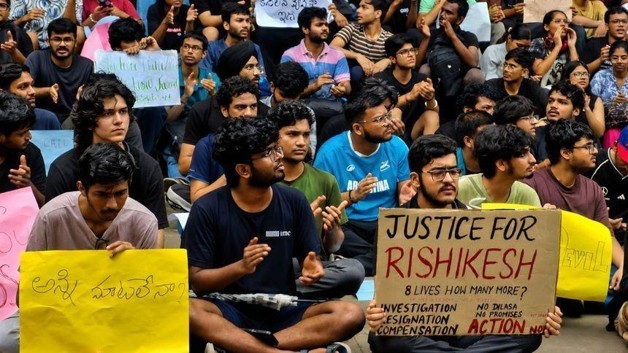
The two recent tragic student suicides on campus have greatly upset all of us. Student suicides are not just a problem at our campus; they are widespread across IITs and IISERs.
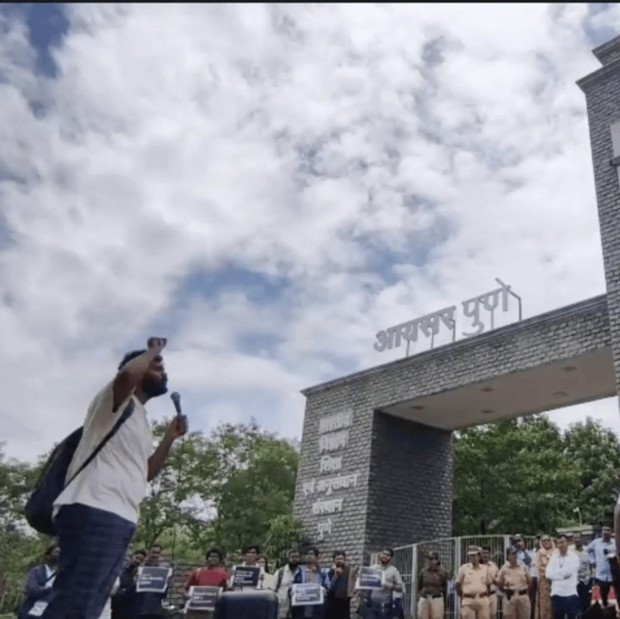
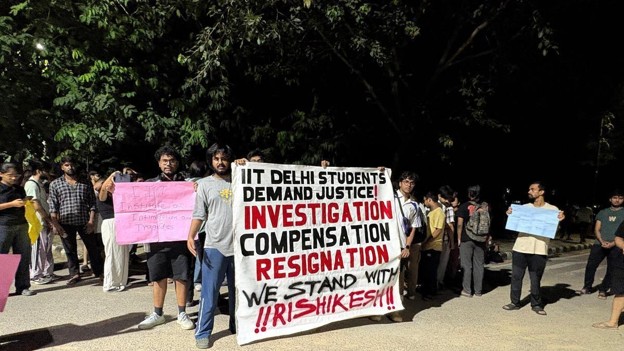
Last year, a student from IISER Kolkata committed suicide because of ragging and mistreatment by his supervisor. This year, a 2nd year BTech student committed suicide at IIT Bombay on July 28th. On August 16th, a student suicide case came from IISER Pune, which has been followed by protests (still ongoing) on the matters of attendance rigidity, on-campus psychiatrist, increasing the number of counselors, better mental health facilities, and destigmatisation of mental health-related issues, among other problems. A 2nd-year M.Sc. student from IIT Delhi committed suicide on August 22nd, marking the 8th suicide at IITD in the last 30 months. The student’s suicide has been largely attributed to administrative negligence and insensitive treatment of the student, leading to campus-wide protests and demands for resignation, better compensation to the mother of the victim, and an investigation of the case. Four students died by suicide in IIT Madras alone from February to July 2023.
In our campus too, there was one student suicide in 2020, four in 2021, and another in 2023. Between 2014 and 2021, there have been 121 student suicides in IITs, IISc, IISERs, IIMs, and central universities. These statistics are only a reflection of the dire situation of widespread mental health problems amongst students.
In a 2025 mental health survey with 1628 student participants
70% students exhibited moderate to high levels of anxiety. The survey also estimated that 60% of participants showed signs of depression, 65% showed loss of behavioural/emotional control, and 70% exhibited signs of distress.
Similar data suggest that 37.2% of medical students report suicidal ideation. These statistics vindicate that student suicides and mental health problems amongst students are not matters of a certain individual’s being weak or failing to overcome the challenges in life, but rather the society and its institutions failing the students in different ways. Why are students feeling anxious, depressed, and suicidal? We must delve into the root causes responsible for mental distress and exacerbation of our mental health conditions.
In this article, we try to look into some aspects in which our institutions are failing to provide us with an environment conducive to our mental well-being. Many other factors, like childhood trauma, social oppression, etc., often shape our mental health conditions. However, in this article, we limit the coverage to institutional failures.
Academic Workload
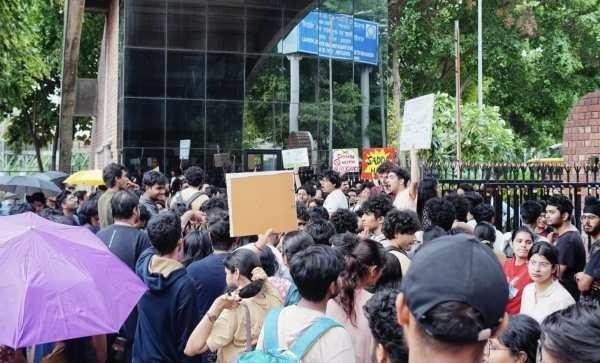
The academic pressure on students at top Indian institutes is unreasonably high. Many students arrive here after a multi-year rat race of competitive exams, only to find themselves in yet another one. The very logic behind the entrance exams was to select the most suitable individuals and focus public expenditure on nurturing future scientists and engineers for the country.
Unfortunately, the rat race continues - to get the best grades, then the best placements, or the best publications. This has now become a system that is very much glorified and promoted by the institutions as well, in which students receive differential treatment by the administration based on their academic performance, and in which certain courses are barred due to unreasonable credit limits.
The mandatory attendance criterion at our institute places the burden on students to attend classes and perform well in their courses, both on the student.. Instead of taking responsibility for either a student’s performance in a course or giving them the liberty to attend classes at their own accord, it dumps both responsibilities on the student and absolves the course instructors of any real performance evaluation. One is supposed to attend classes that they may not find helpful, and put in additional time into the subject to understand it on their own. If a student who attends all classes fails to put in the extra time to study and later performs badly on an exam, they are held solely responsible for that as well! The policy ends up being counterproductive, where instead of helping students, it ends up hurting them.
Similar concerns have been raised by the students of IISER Pune, following the recent student suicide on campus, where one of the demands put forward by students was relaxation of attendance criteria till the mid-sems.
The reluctance of some doctors at the IISc Health Centre to issue medical certificates to students who are not doing well, physically and/or mentally, exacerbates the problem. A student not doing well physically puts their peers at risk of getting sick, not to undermine the mental and physical distress that comes from doing so.
With the introduction of the new UG disciplines, we also see course clashes that prevent students from taking courses they want to or *need* to, in some cases. Again, the onus has fallen on us to meet credit requirements by taking more and more courses while also avoiding scheduling conflicts.
In the name of curbing cheating, the administration has instituted several measures since the last semester. Rules such as strict timing for entry into exam halls, along with frisking during mid- and end-semester exams, have become common. There have been cases of students being barred from taking their exams, all because they were a few minutes late in arriving at the examination hall.
In the context of frisking during exams, a case at IISER Pune recently took over our social media feeds. Students were allegedly taken to a room “with no cameras” and subjected to “dehumanising strip searches”. There was a large student protest on the matter, and a student was suspended over the issue as well.
Such measures to “prevent cheating” reflect horrible standards of respect for students’ dignity as well as quite poor standards of creativity in setting question papers.
For many of us, meeting course requirements and desires often comes with an enormous overall workload, which leaves us very little time for extracurriculars or any social life outside of academic commitments, further contributing to already deteriorating mental health conditions.
Financial Distress
In the recent survey conducted by the Students’ Council, it was found that 81% of the responders believe that a student’s financial situation contributes to mental distress. With the recent fee hikes, the discontinuation of student scholarships for UG students formerly provided under IIScP and INSPIRE, and no increase in student fellowships for PG students, the situation has just gotten worse. The tuition fee for BS students has increased 8-fold, a massive rise from 10k to 80k. The hostel and mess amenities fees have also increased by 50% and are expected to see another hike by the same amount at the end of this academic year.
This year, IISER Mohali students made several demands, one of which was to reduce student fees and freeze them for new batches. In 2024, there were student protests in IIT-M against a 7-month advance being taken from students. The decision was retracted soon after the student demonstration.
Many students are left with no choice but to take education loans to continue their higher studies, even at premier government-funded educational institutions in India. Such a constraint places additional stress on a student already under significant academic pressure.
For multiple families, the cost of our education is high and can only be rationalized if a successful career can be made of it. While it is often said that if we are struggling with pressure and competition in these top institutions, we must realise that there are possibilities and pursuits outside them, this is not the case for students whose families are barely affording an education at these elite institutions or are falling into debt to do so.
Lack of Student Representation in Policy Making
Students are the primary stakeholders in any educational institute. However, in most administrative or academic decisions at IISc, students are not consulted for their inputs or suggestions at any step of the process, whether it is matters related to mental health or fee hikes. Students are always affected by these decisions, but are never involved in the decision-making process.
The disregard for student opinion and lack of transparency in decision-making lead to problems that greatly affect our mental health.
Concerns regarding the lack of student representatives on the Wellness Committee have been raised many times so far. There have been cases brought up by students alleging that the Wellness Centre has leaked their personal information to the administration. These doubts and feelings of mistrust might never end until we see proper student representation in Wellness Centre matters.
The recent student suicide at IIT-D was followed by a protest by students demanding, among many other things, a transparent external inquiry with student representatives included, which was agreed upon by the director of the institute.
On our campus as well, we receive terribly undignified treatment from various members of the institution. Threats of damaging our careers from some professors, horribly insensitive behaviour from some course instructors and PIs, much of the administration revealing its otherwise unseen efficiency in evicting students, and security guards being primarily deployed to monitor and police students while failing to prevent parcel or cycle thefts, are all normalised. Our sense of belongingness in this campus is hurt at every step of our campus life.
Disturbance in the supply of basic amenities and the lack of Third Spaces
The problems with basic amenities we face in our day-to-day lives add to our mental distress. Mess queues may not seem like a monumental issue for mental health, but it is important to examine them critically. Students may avoid going to the mess if it means standing in a queue for 20 minutes. This effectively removes a place for interaction with our peers, further isolating a person. The same goes for the lack of hostel amenities, like games in common areas to promote student interaction. Even the lack of clean drinking water and surrounding health concerns occupy our minds and add to the already existing stress. It is also vital to note that in such matters, the fact that this is a constant mental burden makes it much worse.
Decisions like removing fans from hostels or building “suicide proof hostels” with thick bars on windows do not prevent suicides but rather, only add to the anxiety of the students. This is the same flawed logic as that of “shooting proof” schools in the USA, with thick concrete hiding corners and cages to “protect” students in case of a shooting. Such a focus on mitigating
symptoms instead of addressing the root causes paradoxically leads to more anxiety and stress for the students.
Speaking more on the concept of third spaces, where students can gather and discuss, availability and accessibility to such spaces have been greatly limited in recent times. With many facilities under renovation and rules that prohibit student gatherings, it becomes harder to find places to socialise and meet people.
IISc 2026 handbook, section 15.4 i) states “Organising meetings and processions without permission from the Institute” as a misconduct. Students cannot meet or discuss their problems without approval from the administration. This further isolates the students, adding to their loneliness and hampering their ability to build human connections.
Similar concerns have been raised in IISER Pune following the suicide, where Cross-hostel mobility had been revoked.
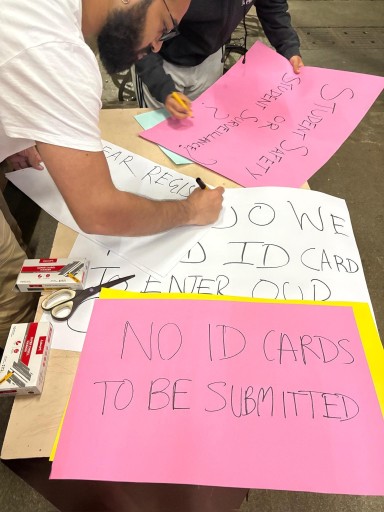
Last year, we saw the introduction of a new “Security Measure” under which girls are supposed to hand over their ID cards to hostel security before entering boys’ hostels. Despite backlash and protests from students, this rule continues to be enforced.
IIT-B also recently saw several restrictions on student mobilisation in and out of campus, such as requiring students to show their ID when exiting the institute and restricting entry and exit to the main gate only. Additionally, food delivery has been restricted to 11 pm, and the contents of the delivery boxes are being subjected to random searches.
Such measures actively hamper students’ socialization, especially given the absence of third spaces where they can sit together and discuss. In addition to the isolation from society outside our campus, we are further isolated as individuals. Such an environment is bound to lead to a higher incidence of student suicides.
Existential Crisis leading to amplification of problems
It is often the case that relationship issues and breakups are swept under the rug as “personal problems” and not talked about. Do breakups cause suicides? No. It is the fact that the person does not see any meaning to living outside that relationship that drives suicidal thoughts. It indicates a person’s alienation from the work they are doing. The institute becomes a place to get a degree, and not a place to learn and grow. Your research thesis becomes a burden, and classes become a chore.
The academic pressure that prevents you from interacting with your peers, the lack of spaces to socialise and other sources of stress in your student life all act together to alienate you from everyone around you. The average IISc student comes from the top of their class; a lot of us
defined ourselves or were defined by our academic excellence. This meaning very quickly shatters for many after being here.
When one gives meaning to one’s life only through one’s career, academic success, or a relationship, a failure in any of these becomes an attack on one’s existence itself. It becomes hard to see meaning in life outside these, ultimately driving one to take drastic measures.
Thus, it is important to remember that we are way more than our academics. Each of us is a complete person outside our relationships, ambitions, and careers. And lastly, we must remember how much potential each of us carries to bring about a change in ourselves and in the world at large.
In conclusion, many problems lie ahead of us: academic challenges, financial difficulties, lack of representation, a dearth of public spaces, and the much larger issue of what we should expect education and work at universities and colleges to be like. It is high time we dwell on these problems and discuss their underlying causes. We need each other. We need to stand together and struggle to change these conditions collectively. The people united shall never be defeated.
Comments