Fireworks - A Spark Spread Across The Globe
Why do we celebrate with noise? A journey from ancient Chinese legends to Indian festivals reveals how a tool for warding off evil became a symbol of joy.
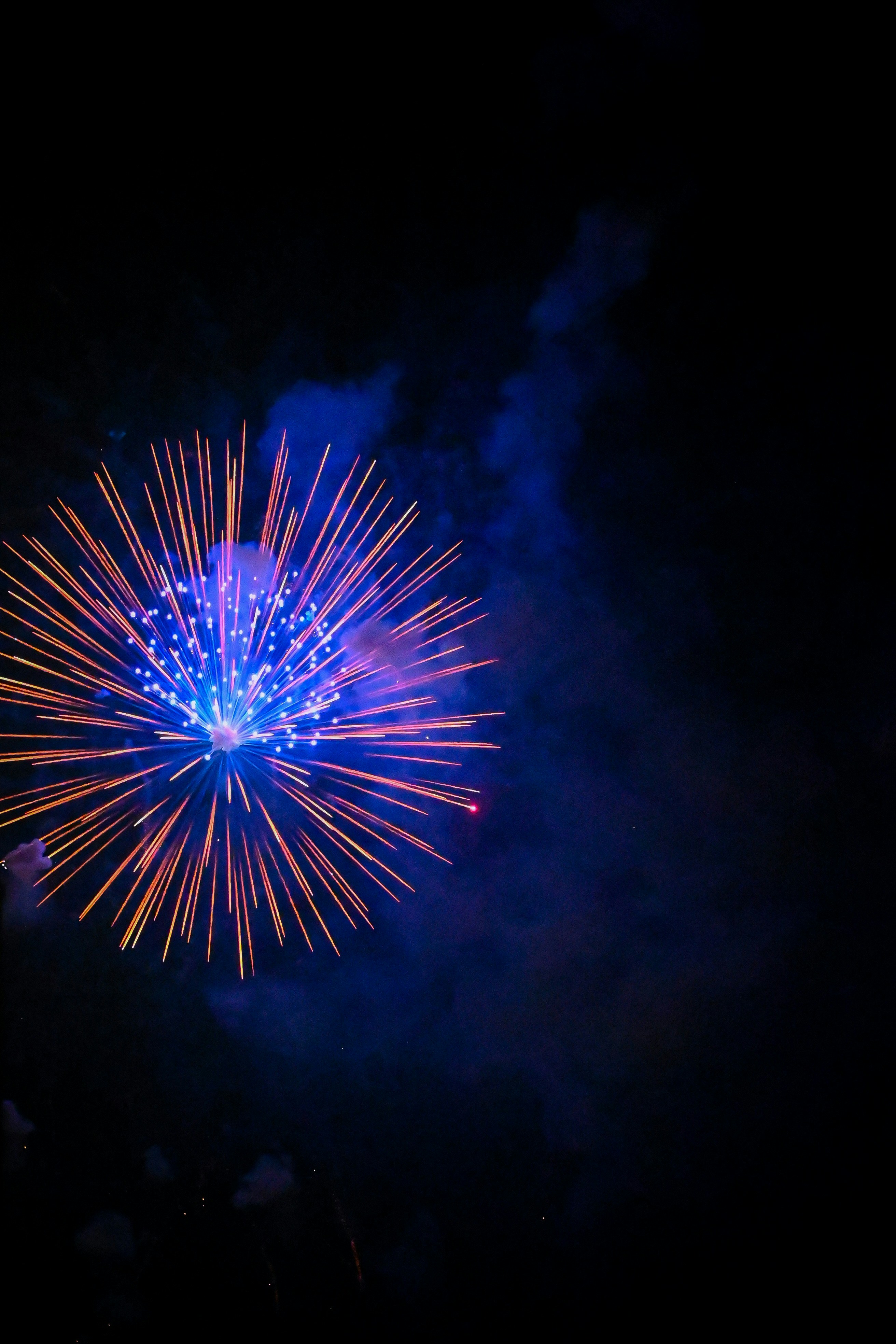
Why do we wake up to our neighbors blasting a 1,000-wala at 5 am on Diwali? Why does Bangalore erupt into noise whenever India beats Pakistan in a cricket game? Why do we celebrate the way we do, with loud noises and flashing lights? A small spark born in China 2000 years ago reached every corner of the world and has ‘loudly’ influenced how we celebrate.
The first example resembling our modern firework is the Baozhu (lit. “exploding bamboo”). It was accidentally discovered in China around 200 BCE when green bamboo stalks were thrown into fires, causing air to get trapped inside the hollows and the bamboo to explode with a loud bang. The Chinese began using these on New Year’s Eve to ward off the Nian—a mythological creature that hides deep in the sea or high in the mountains—coming out to attack villages on this day. According to the legend, the Nian feared the color red, loud noises, and flashing lights, so Chinese festivities adopted the use of popping bamboo as a tradition. This is also why people in China use red decorations, clothes, and couplets during their festivals — they were used to ward off the Nian, and are now deeply rooted in Chinese culture. Even now, although people may not fear the Nian, the habit has stuck.
Fast forward more than a millennium - in the 9th century in China, during the Tang dynasty, alchemists were searching for an elixir, which was said to grant immortality and cure all diseases. One particular trial combined potassium nitrate, charcoal, and sulfur, and this mixture was recorded to burn very fiercely and explode upon heating - we would instantly recognize this as modern-day gunpowder. In fact, Chinese texts even warn against mixing these chemicals together, as the mixture had burned not just hands, but even destroyed houses. Within a century or two, this mixture was added to the exploding bamboo and was put into a fire, which created a much, much louder bang than the bamboo alone, alongside bright sparks - creating the first firecracker, nearly a thousand years ago. This powder then went into fire arrows and bombs—so the thing used to scare off mythical monsters became the one used to fight wars. Ironically, a mixture meant to grant immortality went on to take countless lives.
After the invention of gunpowder, fireworks spread westward along trade routes such as the Silk Road, eventually reaching the Middle East and Europe around the 13th century. Most cultures already had bright lights and loud noises as symbols of celebration, something special, and protection (for instance, Indian culture uses diyas to symbolize light over darkness and to welcome the Goddess Lakshmi). A fire meant warmth; light allowed for sight, and noise
scared off predators, so firecrackers were quickly adopted into special occasions and celebrations across the world. In Europe, they became fireworks for royal weddings, coronations, and military victories. On 5th November, the British celebrate Bonfire Night (or Guy Fawkes Night) to commemorate the day that a plot to blow up the Parliament was foiled.
Chinese still celebrate Lunar New Year with fireworks, one of the biggest traditions, which dates back to the Nian.
Even though fireworks were initially bright due to charcoal sparks, they were not very colorful for many centuries. Italian pyrotechnicians from the Renaissance onward have refined fireworks into an art form. Colors in fireworks were developed using different metal salts:
Strontium gives red, barium gives green, copper gives blue, sodium gives yellow, and calcium gives orange. All the colors for fireworks were developed around the 19th century and also quickly spread around the world. This was, of course, adopted by the Chinese as well, who believed that flashing lights scared away the Nian.
Some scholars argue that Sanskrit texts from around the 8th century record a substance with properties similar to gunpowder, and some even claim that Kautilya’s Arthashastra (compiled between 300 BCE and 300 CE) refers to potassium nitrate. However, there is no clear evidence that Indians recognized the utility of gunpowder in fireworks. Fireworks, as we know them, only entered India in the 15th and 16th centuries, spreading throughout the country, with displays reserved for royal events and important regional festivals (including Muslim festivals like Shab-i-Baraat). For instance, paintings show that fireworks were used at the 1633 marriage of Shah Jahan’s son. For the marriage of Adil Shah (the Sultan of Bijapur), the equivalent of over Rs. 80,000 was spent on fireworks alone in the 17th century!
Through the Mughal era, emperors added fireworks to court festivities, setting them as a symbol of wealth and royalty. Other wealthy people began copying this, though for festivals like Diwali.
After Mughal influence in India began to decline, Maratha records show that large-scale public Diwali firework displays became more common throughout the 18th and 19th centuries. In the
early 20th century, mass industrial production of fireworks began in India, with firework factories first being established in Kolkata. Then, in the 1920s, two pioneers (P. Ayya Nadar and A. Shanmuga Nadar) traveled to West Bengal to learn firework making and began to set up factories in Sivakasi, Tamil Nadu - the hot, arid weather helps dry chemicals and paper tubes during manufacturing, making it a good location. 70-90% of the country’s fireworks are estimated to be manufactured in Sivakasi, serving as India’s “firework capital”. Once local factories made fireworks relatively cheap and accessible, what started as a lavish royal display became a family custom passed down generation to generation, until it reached us today.
In the present, we get fireworks for many celebrations - from traditional Diwali ones to India-Pakistan victories to RCB bringing home the trophy.
However, this journey has not been very smooth. The issue of air pollution has persisted, as the combustion of charcoal releases large amounts of carbon dioxide, which contributes to global warming. Carbon monoxide and sulfur dioxide are
also released, both of which are toxic and can cause lung irritation. Smoke also reduces visibility, and the noise can be disturbing for some who may not be partaking in the celebrations. Also, firework smoke along with microscopic metal dust (from the color) can irritate the lungs and cause severe asthma attacks, posing a significant threat to those who do have asthma. Stray animals may also face danger from both the explosions and the smoke. Therefore, as governments have grown more organized and regulation has become more common, there have been many restrictions and ban orders issued on fireworks: for instance, the smog was so bad after Diwali in Delhi-NCR in 2016 that the court issued a suspension on the sale and distribution of fireworks in the NCR region, and in 2018, joint firecrackers (also called laris, e.g., the 1000-wala) were banned throughout India due to excessive noise and pollution.
After research, green crackers were developed by CSIR-NEERI, said to reduce pollution levels by 30-40%, but they still cause pollution. So, on one hand, people want to celebrate and go all out on one day for Diwali, but on the other hand, the government is worried about the air that the country is breathing. Both sides have their points, but we still have to find some balance between the two.
So why do we celebrate with noise? Maybe because it started off as protection, and at some point, scaring away evil came to represent being happy together. A 2,200-year journey from popping bamboo stalks to our present-day fireworks blasting every year on Diwali, or when India beats Pakistan. The tradition has evolved over time, and it will continue to evolve as we seek a balance between pollution and celebration. But the instinct behind it is over 2,000 years old: when we are happy, we want everyone to know.
Comments