A Place We Left Behind
One day, even the last person who remembers this place may forget the colour of its doors, the sound of its corridors, or where exactly it stood. But for a while longer, it remains here—in photographs, in stories, and in the lives that once passed through it.
There are so many places on the campus that disappear long before they are
demolished. The old Amenities Centre is, or rather was, one of them.
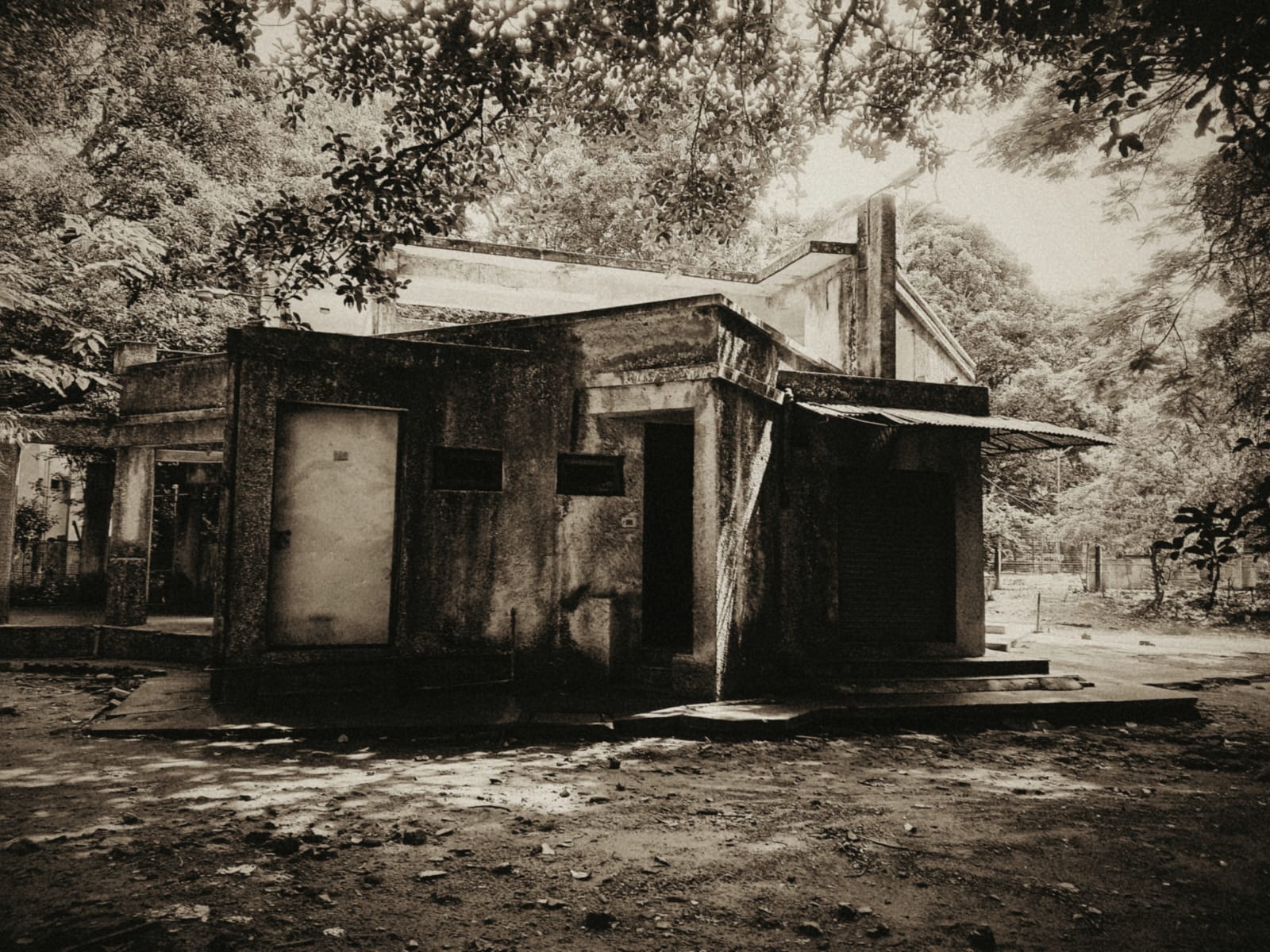
One afternoon, I strolled near Janata Bazaar for hours looking for this very building, for this very story. I couldn’t find it. This, in retrospect, seems almost absurd now. The place was completely exposed, sitting in plain sight, basking in the golden-hour sunlight, with not even a single tree to hide it. And yet, I walked past it without recognizing what I was looking so desperately for. Perhaps that is what happens to places that have been abandoned long enough: they stop looking like the places we remember; perhaps we lose them in the familiarity of mundane, unobservant life. The next afternoon, I marched there again with my camera. This time, I found it.
Or perhaps, it found me.
There was nothing particularly inviting about the building except for the heart-wrenching questions one might have upon seeing its dilapidated state. It stood silently and strangely desolate, as if someone had switched off its lifeline for their own selfish needs. The paint had started crumbling off in patches. The walls were weathered and scarred. Dust had settled onto the floors that must have once been witness to over a hundred footsteps a day.
I walked in. And almost immediately, the place felt less like an abandoned building and more like a room that someone had forgotten to tell was empty.
There were remnants everywhere; not grand ones, not the ones that belong to a museum. Just things of ordinary life. A faded signboard. Old blue doors. Marks and scratches on the wall. A shutter that had probably been pulled down thousands of times. Empty spaces where shelves, chairs, people, and conversations must once have been.
Nothing looked important, but somehow everything did.
While I was trying to take photographs, I kept trying to imagine the place alive—
Someone rushing in because they had forgotten something before class. Someone lingering long after they had done what they had initially come for. Two friends arguing over some unsolvable paradox. Someone waiting impatiently for a first date, or maybe someone laughing a little too loudly. Someone having a terrible day and quietly sitting here because they have nowhere else they particularly want to be.
Years of ordinary life occurred right inside these walls.
That is perhaps the saddest thing about abandoned places: they are rarely devoid of memories. They are, more often than not, overflowing with them.
I wondered how many students had walked through the same corridors without ever imagining that one day this place would be etched into their past. How many people had stood where I was standing, thinking only of their next class, quiz, and due assignments? None of us knows when an ordinary afternoon will turn into a core memory.
The strangest part was that I had come there to take photographs. But after a while, it felt as though I was photographing something that didn’t exist anymore. I was photographing absence. The empty spaces where things were once kept. The faded surfaces where tired hands once rested. The quiet corners that had once absorbed conversations. The slow decay of something that had once been completely ordinary.
The camera captured the walls, doors, and the tilted, lifeless signboards. But I wished to capture the life that had disappeared from them.
The old Amenities Centre was not ‘pretty’ anymore, as new buildings here at IISc are built to be. There was no polished, romantic perfection to it. It was bitten off and mutilated by time, and in places, almost unrecognizable. But perhaps that made it all the more beautiful. Maybe beauty was never really about how well a place survives. Maybe it is about what it manages to leave behind.
We often think of places as buildings—as bricks, walls, doors, and roofs. But places are really made of moments. Of footsteps that have long since faded. Of conversations no one remembers word for word. Of laughter that no longer echoes through the corridors. Of ordinary afternoons that, without anyone knowing, became little pieces of someone’s life. One day, even the last person who remembers this place may forget the colour of its doors, the sound of its corridors, or where exactly it stood. But for a while longer, it remains here — in photographs, in stories, and in the lives that once passed through it.
Comments