Jantar Mantar, Democracy, IISc
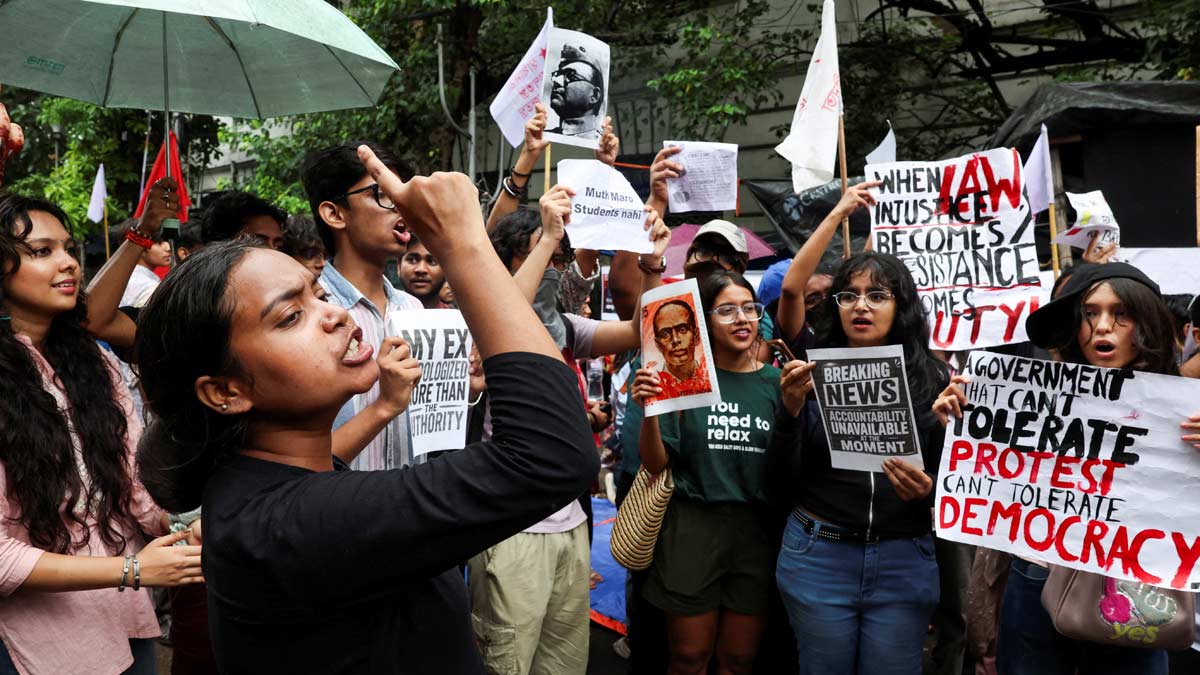
In June 2026, the Cockroach Janta Party (a youth-based political movement that began as political satire) began organizing a series of protests across various states, calling for the resignation of Union Education Minister Dharmendra Pradhan over recent scandals such as the NEET 2026 paper leak. On 28 June, reformer and activist Sonam Wangchuk, along with 6 students of the All India Students’ Association (AISA), sat on an indefinite hunger strike for the same.[1] On 18 July, he was forcibly removed from Jantar Mantar and shifted into a hospital (in compliance with a Division Bench Order dated 16 July, per the High Court)[2], which, according to Gitanjali J. Angmo, was illegal detention and had involved no consent whatsoever.[3]
Following these events, CJP founder Abhijit Dipke announced an indefinite hunger strike. On July 20, the protesters planned on peacefully marching to the Parliament.[4] What happened after this was shameful. Section 163 (previously the infamous section 144) was enforced.[5] The police, acting without provocation (even if provoked, overreaching, and overstepping), without name plates on their chests and often without uniforms, began a violent lathi-charge[6], threw expired tear gas shells[7], and detained peaceful protesters[8], right in front of the Parliament. The internet was shut down[9][10] in the area, and so was the metro.[11]
Reports are now surfacing of how the police falsely accused protesters of pelting stones, damaging property, and used these accusations to not only justify their actions,[12][13][14][15] but also to frame them as conspirators and “anti-nationals”.[16][17][18] Their tents were destroyed,[19] pellet guns were deployed,[20] and recent updates even suggest that the police recorded videos for identification of protesters and have been detaining them from their own homes.[21][22] Opposition leaders announced a sit-in demonstration and were detained. The legality of these detentions is questionable.[23]
The protest continued, in fact grew in number and might. This protest became a question mark not only for the people currently in power but also for all the democratic institutions of the nation. After a point, it was no more about one leaked question paper - though that remained the primary concern -it became a question of accountability. Who is to be blamed? The blame itself has grown exponentially, as the extreme physical and mental violence unleashed by the state compounds over its already infuriating response to complaints against its own inefficiency. As such, this has stopped being a question of having complaints altogether but has become a question of the ideal relationship between a state and its citizens in a democracy.
The Constitution of India grants to all its citizens equality, fraternity, and liberty. What went on in Delhi in the past few weeks was, to repeat a point already made, shameful. On the same day, July 20, a solidarity gathering took place in IISc. It was first announced by the students’ council chairman on July 18, the day Wangchuk was detained. The mail ended with unwavering solidarity for the protesters and strong condemnation of the undemocratic and shameful violence. The gathering was scheduled at 9 p.m. At 8 p.m., another email was sent out by the office students’ council aimed to provide clarity. This mail announced how ‘the decision to organize the gathering was not discussed or approved by the council’ and ‘necessary prior permissions have not been obtained’. It went on to clarify that the Council logo on the circulated poster did not indicate the Council’s approval or endorsement.
The gathering took place as planned. The turnout was heavy. Emotional speeches were delivered, beautiful bits of poetry were presented, a few songs were sung. The IISc security personnel, both in uniform and out of uniform, were also seen keenly observing, even clicking pictures. Among multiple issues of national interest (including, but not limited to, minority rights, the Trans Act protest, the Ken-Betwa protest, the inefficiency of the state and its complicity, etc.), a few problems from within the campus were brought up. The problems brought up there reflect a very alarming state of affairs. There is a plethora of them, and each merits multiple articles on its own.
The primary issue, however, seems to be a damnable lack of democratic procedure. No one is consulted, no one is informed, no one owns up to the damages dealt. Recently, the tuition fee has been hiked. It seems there was not even a survey of how it would affect students currently studying here, let alone its effect on people planning to join the institute in the future.[24] Some time ago, women were banned from entering male hostels without submitting their IDs to a security personnel on the gates of the hostel, and pictures of protesting students were used to mete out threats of disciplinary action. The institute’s policy regarding funding, allocation, and other administrative procedures appears to follow the same scheme. You can be asked to pay 7000 for a scratch on your wall, you can be asked to clear your room as soon as exams end, sometimes even earlier, without prior notice or information. The institute’s attitude towards mental health is quite excellent as well.
As such, at a time when the nation struggles to find its own democracy, perhaps we should look at what we, as the premier institute for science and research in India, have accomplished. There is practically no stage for dialogue between students and the administration; student opinions and benefits are never considered in any rule or regulation; demands are rarely met; protests and protesters are quashed with extreme vigor; mobility (literally mobility) is heavily regulated; and transparency is rarely maintained.
The gathering was followed by another mail with three signatories from the Council- Chairperson, Secretary Women’s Affairs, and Secretary UG Affairs. This mail was an explanation for the last and an answer to the council members’ question about “misuse of power”. It claimed that members of the council had acted well within their rights as per the bylaws, and that the issue was urgent enough not to wait for the next meeting. The poster for this gathering, the mail claims, has now been removed from their Instagram, and the password for the same has been changed. As the protest and the retaliatory violence of the state keep growing, people look up to the learned for forming their opinions. No matter how unbothered we are by what goes on around us, we cannot shake the fact that what goes on around us is immensely affected by what we do.
IIT Roorkee, founded by a lieutenant-governor in the East India Company, recently issued an advisory stating no student or employee should express any opinions that could “embarrass relations between the institute and the central government.” It faced considerable backlash to the point that an explanatory statement was issued within a day.[25] Protests recently shot up at IIT Madras, after which the Dean, known for having an excellent scientific temperament, asked the students to delete all pro-protest videos immediately to avoid tarnishing “IITM’s relations with the central government.”[26] A few days after the solidarity gathering, email access to office IDs was revoked for members of the IISc Students’ Council. The administration has announced neither this decision nor its justification to the students. Things simply happen. People (including students, peaceful protesters, and even people who simply supplied the students with food and water) continue to be detained, arrested, and harassed by the state for being part of the protests. [27]
Students present at the solidarity gathering decided that they would collectively undertake the following further steps: a signature campaign is to be started within IISc, and an effort has to be made to establish contact with other institutes of eminence, helping the protest grow even further and wider. Looking at the situation we are in, however, it remains to be seen which democratic decisions, if any, see the light of day. Anyone wishing to volunteer for the campaign may write to a trusted representative.
The events of the past few weeks have raised fundamental questions about the nature and the values of democracy. The fight for accountability goes on, as does the debate for its utility. The fight against repression goes on, as does the debate over its necessity. The fight goes on for freedom of speech and expression, the fight goes on for fundamental rights. The fight goes on for democracy. As we all look to Delhi with a strange, new mixture of hope and fear, let us not forget that we, as citizens of the nation and as beneficiaries of one of its most prestigious institutes, can contribute to the great ocean that is democracy with our own little droplets- of water, of sweat, of question.
After all, democracy starts at home.
References:
[2]https://bbc.com/news/articles/cjej3dxxg2do
[8]https://www.thequint.com/my-report/cjp-protester-teacher-detained-overnight-jantar-mantar-new-delhi
[12]https://youtube.com/shorts/hF-8r54TqHE?si=bnFqxE4FqXHYvPxk
[13]https://www.instagram.com/reel/DbEFZbxhiZI/?igsh=aG5lc3M5d2N2aXQ0
[14]https://www.instagram.com/reel/DbDKrBrIi8e/?igsh=ZWp1cjFsdmMyMXE5
[15] https://www.instagram.com/reel/DbDUz33vBbf/?igsh=MWR3OHdxZnZ6ODlvcA
[17]https://www.thehindu.com/news/cities/Delhi/fir-count-in-cjp-protest-rises-to-10/article71255162.ece
[18] https://youtu.be/dS3xqTupqUI?si=uKF2GQp4MFGw18bg
[21]https://www.instagram.com/p/DbIApYLAm3w/?img_index=1\&igsh=eWNpNzQxYXlhYWZn
Comments